Jerusalem Must Welcome Jesus Home
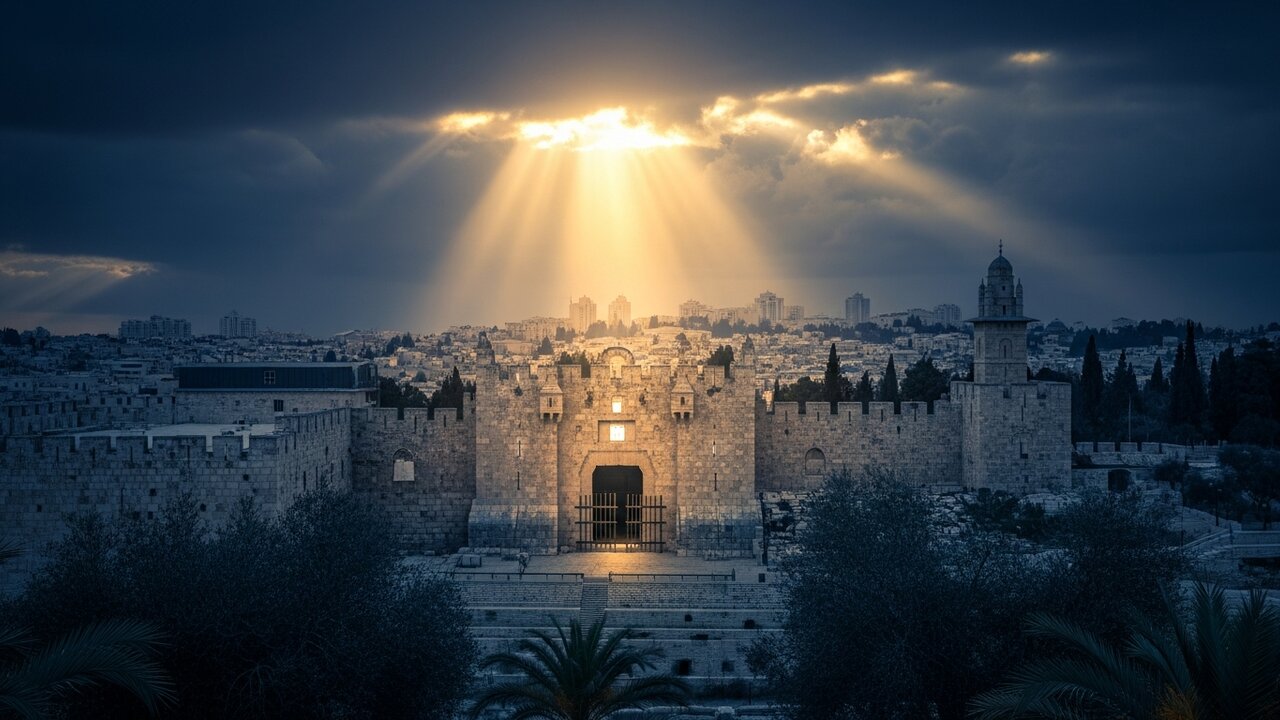
Why Israel's "Yes" Is Still Part of the Story
There is a moment recorded in the Gospels that most of us read past without noticing what it promises. Jesus stands over Jerusalem, grieving, and says something that sounds almost like a riddle: you will not see Me again, He tells the city, until you say, "Blessed is he who comes in the name of the LORD." That is not a throwaway line. It is a hinge on which the whole end of the story turns.
This post grew out of two things happening at once. First, a season studying the closing chapters of Numbers — the Torah Club material, which reviews Israel's forty-year journey the same way it reviews the whole sweep of redemptive history, from this present world into the World to Come. Second, a conversation — in the form of a long-form interview with Messianic Jewish apologist Dr. Michael Brown — about how much of this gets missed or actively mistaught in the church today. Put those two things side by side, and thirteen threads start to weave into one picture. Let's walk through it.
1. No One Sees Him Reign Until Jerusalem Says Yes
Matthew records Jesus weeping over Jerusalem and pronouncing what sounds, on the surface, like abandonment:
Your house is left to you desolate; for I say to you, from now on you will not see Me until you say, "Blessed is he who comes in the name of the Lord!"
— Matthew 23:38–39
But read carefully, that is not a verse about permanent rejection — it is a promise of a future welcome. The words Jesus quotes, "Blessed is he who comes in the name of the LORD," are the very words the crowds shouted at His triumphal entry days earlier (Matthew 21:9). He is telling Jerusalem: you already know how to say this. You will say it again — and when you do, you will see Me.
Revelation makes the scope of that seeing unmistakable: "Behold, He is coming with the clouds, and every eye will see Him" (Revelation 1:7). Put those two texts together and a striking conclusion follows: the full, visible, universal reign of the Messiah on this earth is tied to a specific, national moment — the moment a Jewish Jerusalem recognizes and welcomes Him. Paul says the same thing in different words in Romans 11: a partial hardening has come on Israel "until the fullness of the Gentiles has come in, and so all Israel will be saved" (Romans 11:25–26). Israel's story and the nations' story are not two separate plotlines. They are one plot, and it does not resolve until both halves come together.
2. The Narrow Path Is Not a Puzzle — It's a Direction
It is easy to hear "narrow path" and imagine something cryptic, a secret only the initiated can find. Scripture describes it more plainly than that. The narrow path is simply the set of principles God has already made clear — love, justice, humility, faithfulness, repentance — and the invitation is not to decode them but to walk in them.
He has shown you, O man, what is good; and what does the LORD require of you but to do justly, to love mercy, and to walk humbly with your God?
— Micah 6:8
Here is what makes this more than personal piety: every generation that walks this path moves the whole world one step closer to the World to Come. It is not that individual holiness earns a private reward while history grinds on unaffected. Genesis 18:19 tells us Abraham was chosen precisely so that he would command his household "to keep the way of the LORD, to do righteousness and justice" — for the sake of a promise that would bless "all the nations of the earth." One family's faithfulness was always meant to ripple outward. Ours still does.
3. A Sanctuary Built Out of Love for Neighbor
"You shall love your neighbor as yourself" (Leviticus 19:18) is not a stand-alone ethic floating apart from Israel's larger story. In its own context it sits inside instructions about holiness — about a people set apart so that God's presence could dwell among them. Every act of love toward another person is, in miniature, an act of sanctuary-building. It clears a little more space for God to dwell.
That is exactly the trajectory the whole biblical story is heading toward. The vision of New Jerusalem in Revelation is this: "Behold, the tabernacle of God is with men, and He will dwell with them" (Revelation 21:3). The Garden opens the story with God walking among His creation; the New Jerusalem closes it the same way. Everything in between — the whole sweep of covenant history — is God rebuilding the conditions for that dwelling to return.
We have real work to do here — love does not build itself. But we are not the ones who finish the project. Hebrews 12:2 calls Yeshua "the author and finisher of our faith." We lay bricks. He completes the building.
4. The Kingdom Is the Light Everyone Is Actually Looking For
Ecclesiastes says God "has put eternity in their hearts" (Ecclesiastes 3:11) — in everyone's hearts, not only the hearts of believers. That restlessness so many people feel, the sense that something more is supposed to be true, is not a design flaw. It is a compass pointing toward a real destination. Abraham "waited for the city which has foundations, whose builder and maker is God" (Hebrews 11:10), and Hebrews says plainly, "here we have no continuing city, but we seek the one to come" (Hebrews 13:14). Every person chasing meaning, security, justice, or home is — knowingly or not — chasing something only the Kingdom actually delivers.
5. Salvation Was Never Meant to Stay Small
It is easy, especially in individualistic cultures, to shrink salvation down to a private transaction between me and God. Scripture keeps insisting it is bigger than that. Paul describes "the whole creation" groaning, waiting "for the revealing of the sons of God," longing to be "delivered from the bondage of corruption into the glorious liberty of the children of God" (Romans 8:19–21). The World to Come is not a private apartment in the sky — it is all creation, dwelling with God, together.
Each of us lives and dies inside a small window of time. But none of our stories are the whole story. We are each a thread being woven into something much larger: the whole world being carried toward the World to Come. That is what Jesus meant when He said, "Repent, for the kingdom of heaven is at hand" (Matthew 4:17) — not merely "get right before you die," but "get ready, because something enormous is coming for everyone."
6. Our Part, and the Part That Is God's Alone
So what is ours to do? Transform the world we're given so that it becomes a fit dwelling place for God — through repentance, through justice, through love of neighbor, through faithfulness to what Torah has already made clear. What is not ours to do is control the timing. "Of that day and hour no one knows" (Matthew 24:36). We plant. We build. We do not get to see the whole blueprint.
And we do this work knowing the outcome is secure, because "He who is coming will come and will not tarry" (Hebrews 10:37), and "the LORD is not slack concerning His promise" (2 Peter 3:9). God will reward the righteous, judge the wicked, and show grace to everyone who seeks Him — not because we have engineered that outcome, but because He has bound Himself to it.
7. One Name, One World — and Still, Somehow, Ourselves
And the LORD shall be King over all the earth. In that day it shall be — the LORD is one, and His name one.
— Zechariah 14:9
The Rabbis say, "Wisdom is actually revealed by way of its opposite, folly, just as light would not be known without darkness, nor white without black, nor sweet without bitter, nor health without illness." In this world we get the experience to understand this by living life, and we gain an identity through that process. For example, we gain character through persevering, we learn to love others through difficult relationships, and we are proven through our actions on how we deal with obstacles in our life; we gain an identity in Christ through life. In a way we cannot fully understand until we arrive, The World to Come reconciles opposites without erasing identity. In the end, everything will make perfect sense, and we will all have our own identity, but be one in Messiah. Zechariah's picture of the whole earth united under one Name does not mean everyone becomes interchangeable. Revelation's New Jerusalem still has twelve gates named for the twelve tribes and twelve foundations named for the twelve apostles (Revelation 21:12–14). Unity, in God's design, has never meant sameness. It means every distinct thread finally pulling the same direction.
8. How the Story Actually Ends
Put the pieces together and the shape of the ending comes into focus: a surviving remnant of Israel sees the Messiah and turns to Him in national repentance (Romans 11:26; Zechariah 12:10). The dead are raised. Judgment is rendered — justice for the wicked, reward for the righteous, grace for every seeker. God's Kingdom is fully established on this earth, in Jerusalem, with the nations streaming in to learn His ways (Isaiah 2:2–4). And in the end, this world itself is made new — heaven and earth united, the dwelling place of God with humanity, forever.
This was not always considered a fringe view in church history, either. Irenaeus, writing in the second century in Against Heresies, laid out this same basic shape — tribulation, the Messiah's earthly reign centered on Jerusalem, final judgment, and a renewed creation — as ordinary, mainstream Christian belief. Long before later centuries reinterpreted these promises as purely spiritual metaphors, the earliest church read them the way the prophets wrote them: as a real future, for a real people, in a real place.
Key Takeaways
- Jesus tied His visible return to a specific moment: Jerusalem welcoming Him with the same words the crowds once shouted (Matthew 23:39; Revelation 1:7).
- The "narrow path" is not hidden — it is Torah's plain call to justice, mercy, and humility, walked out one generation at a time (Micah 6:8).
- Loving our neighbor is not incidental to God's plan; it is literally how a dwelling place for His presence gets built (Leviticus 19:18; Revelation 21:3).
- Every human being's restlessness for "something more" is, in Scripture's own terms, a homesickness for the Kingdom (Ecclesiastes 3:11; Hebrews 13:14).
- Salvation's scope is cosmic — "the whole creation," not a private arrangement (Romans 8:19–21).
- Our responsibility is faithfulness and repentance; the timing and completion belong to God alone (Matthew 24:36; Hebrews 12:2).
- The World to Come unites all things under one Name without erasing anyone's identity — the twelve tribes and twelve apostles are still named on the gates of New Jerusalem (Zechariah 14:9; Revelation 21:12–14).
- This entire outline — Israel's national turning, resurrection, judgment, and a renewed earth — was recognizably mainstream Christian belief as early as the second century.
Frequently Asked Questions
Does this mean Jesus can't return until Israel, as a nation, believes in Him?
That is the plain implication of Matthew 23:39 and Revelation 1:7 read together, and it's reinforced by Romans 11:25–26, which speaks of a future "fullness of the Gentiles" coming in alongside a national turning of Israel. It is not a side detail of prophecy — it's part of the climax.
Doesn't emphasizing Israel's future role take anything away from salvation through Jesus?
No. Affirming that God keeps His promises to Israel doesn't diminish what He has done for anyone else — it demonstrates His faithfulness, which is exactly what gives every believer, Jew or Gentile, confidence that His promises to us are just as secure.
What is the "World to Come," and how is it different from heaven?
In Scripture, the World to Come isn't a disembodied afterlife — it's a renewed, physical creation where heaven and earth are joined, described in Revelation 21–22 as the New Jerusalem descending to a new earth. It's this world, healed and made permanent, not an escape from it.
If God has already decided how history ends, why does repentance matter now?
Because this present, imperfect world is the only place where repentance is even possible. Once the outcome is fully revealed, there's no more choosing between right and wrong — the choice is what makes this life, and this moment, so valuable.
Where should I start if I want to study this further?
Start with Matthew 23:37–39, Romans 11, and Revelation 21–22 side by side. If you've read our earlier posts "Fall Into Formation" and "Every Link in the Chain," this post is really a continuation of that same thread — and "The Center Holds" walks through why Israel's calling was never meant to be replaced, only joined.