Christendom Tested: Crusade, Persecution, and the Road to the Inquisition
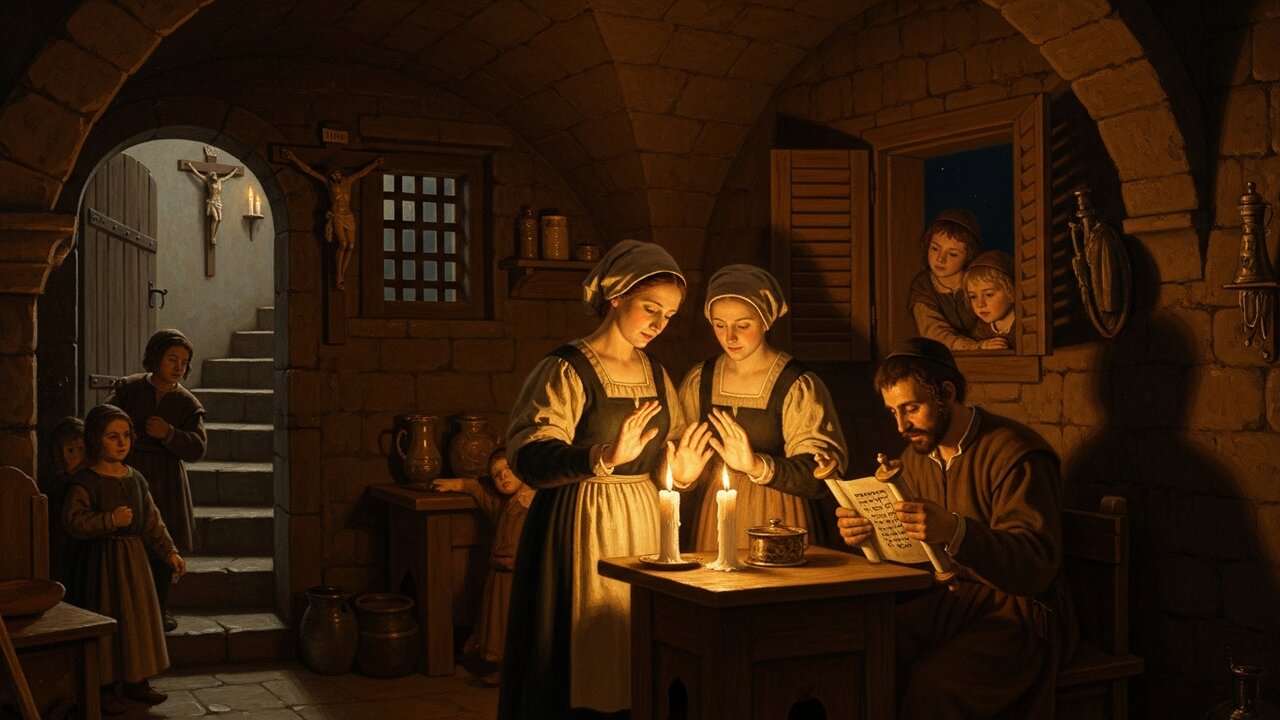
The Relationship Between Israel, the Church, and Political Power · Part 5 (AD 800–1492)
Part 4 ended on Christmas Day, 800, with Pope Leo III crowning Charlemagne and fusing papal and imperial authority into what historians call Latin Christendom. What follows is nearly seven hundred years in which that fusion of church and political power was tested, again and again, against real crises — a schism inside the church itself, holy war, plague, mass expulsion, and finally an inquisition that reshaped how an entire civilization thought about identity and belief.
This is the longest stretch this series has covered in one post, and for good reason: it's the period where the tension introduced back in Part 4 — a persecuted movement that had become a governing power — plays out in full. That power sometimes built hospitals, universities, and centuries of theological and artistic achievement. It also, repeatedly, turned against the Jewish communities living inside Christendom's borders. Both things are true, often in the very same century.
Key Takeaways
- Between 800 and 1054, the Church became the organizing framework of European life itself — law, education, marriage, and kingship increasingly passed through it — before splitting permanently into Roman Catholic and Eastern Orthodox branches in the Great Schism.
- The Investiture Controversy (1075–1122) settled who controlled the appointment of bishops in the Pope's favor, making the papacy more independent and more powerful than it had ever been.
- The First Crusade (1095–1099), called to recover Jerusalem, produced the Rhineland Massacres before Crusaders even reached the Holy Land — the destruction of entire Jewish communities in Mainz, Worms, and Speyer that remain foundational tragedies in Ashkenazi Jewish memory.
- Beginning with the 1144 accusation against William of Norwich, the Blood Libel became a recurring, evidence-free catalyst for mob violence against Jewish communities across medieval Europe.
- Pope Innocent III's Fourth Lateran Council (1215) formally imposed distinctive Jewish dress and further social restrictions in many regions, even as it also standardized much of medieval Catholic life.
- The Black Death (1347–1351) killed roughly a third of Europe's population; despite Pope Clement VI issuing bulls explicitly rejecting the accusation that Jews caused the plague, thousands were murdered and hundreds of communities destroyed.
- The Spanish Inquisition (1478) is widely misunderstood: it did not primarily target practicing Jews, but baptized Christian Conversos suspected of secretly continuing Jewish practice — and its doctrine of Limpieza de Sangre made ancestry itself, not belief, the basis of suspicion.
- In 1492, the same year Columbus sailed for the New World, the Alhambra Decree expelled Spain's Jewish population, ending over a thousand years of Jewish civilization there almost overnight.
A Quick Timeline
| Year | Milestone | Significance |
|---|---|---|
| 800–1054 | Christendom consolidates | Church becomes the organizing framework of European law, education, and kingship |
| 1054 | The Great Schism | United Church splits into Roman Catholic (West) and Eastern Orthodox (East) |
| 1075–1122 | Investiture Controversy | Papacy wins independence from imperial control over bishops; emerges stronger than ever |
| 1095–1099 | First Crusade | Urban II calls for Jerusalem's recovery; Rhineland Jewish communities massacred en route |
| 1144 | Blood Libel begins | William of Norwich accusation launches centuries of recurring anti-Jewish violence |
| 1198–1216 | Innocent III | Papal monarchy reaches its peak; Pope claims authority above kings |
| 1215 | Fourth Lateran Council | Standardizes Catholic life; imposes distinctive Jewish dress and further social separation |
| 1290–1394 | Great Expulsions | England, then France (twice), expel their Jewish populations; center of Jewish life shifts east |
| 1347–1351 | The Black Death | One-third of Europe dies; Jews are scapegoated despite papal bulls rejecting the accusation |
| 1391 | Riots across Spain | Thousands murdered or forcibly converted, creating the Converso population |
| 1478 | Spanish Inquisition begins | Targets baptized Conversos suspected of secret Jewish practice, not practicing Jews |
| 1492 | The Alhambra Decree | Spain expels its Jewish population, ending over a thousand years of Jewish life there |
Phase 1: Christendom Takes Shape (800–1054)
For roughly two and a half centuries after Charlemagne's coronation, Europe slowly became something genuinely new — not a restored Rome, and not the small, informal network of the early apostolic church, but Christendom: a civilization in which the Church wasn't simply one institution among many, but the framework society itself revolved around. Education, law, kingship, marriage, and economic life increasingly all passed through ecclesiastical hands. This is the soil the rest of this post's history grows out of.
Phase 2: The Great Schism (1054)
A church that had remained institutionally united for a thousand years finally split in two. The causes were layered — disputes over papal authority, language differences between Greek East and Latin West, centuries of political divergence, and the theological Filioque controversy over the wording of the Nicene Creed all contributed. The result was a permanent divide: Rome became the Roman Catholic West, Constantinople the Eastern Orthodox East.
One underappreciated effect: after 1054, the Pope no longer had to negotiate religious authority with Constantinople. Rome became the unquestioned center of Western Christianity — a consolidation of authority that mattered enormously for everything that followed in this post.
Phase 3: The Investiture Controversy (1075–1122)
This struggle is often overlooked, but it's hard to overstate its importance: who has the authority to appoint bishops — the Pope, or the Holy Roman Emperor? Decades of conflict between popes and emperors over this single question ended with the papacy emerging significantly more independent of imperial control than before. By the time of Innocent III a century later, the office could plausibly claim authority over kings themselves — a claim that would have been unthinkable to Gregory the Great.
Phase 4: The Crusades (1095–1291)
This is where the post slows down, because the Crusades were not a single war — they were nearly two centuries of intermittent military campaigns, and their impact on Jewish history began before most Crusaders ever reached the Holy Land.
Why They Began
Pope Urban II called for the First Crusade in 1095 to aid the Byzantine Empire and recover Jerusalem from Seljuk Turkish control. Many participants sincerely believed they were defending fellow Christians in the East and protecting the safety of pilgrims to the holy sites — the Crusades weren't, at their point of origin, conceived as a campaign against Jews at all.
The Rhineland Massacres (1096)
But something terrible happened almost immediately, and far from Jerusalem. Before significant numbers of Crusaders had even left Europe, bands of them attacked Jewish communities along the Rhine — in Mainz, Worms, and Speyer. Entire communities were destroyed. Many Jewish residents chose suicide over forced baptism rather than renounce their faith. These massacres became, and remain, foundational tragedies in Ashkenazi Jewish collective memory — the moment a movement launched in the name of defending the faith turned first against the Jewish neighbors of the very Crusaders who marched under its banner.
Jerusalem (1099)
When Crusader forces finally took Jerusalem in 1099, they killed large numbers of the city's Muslim and Jewish inhabitants. Contemporary chroniclers describe Jews taking refuge inside a synagogue that was subsequently burned, though historians debate some specifics of these accounts. What isn't in dispute is the lasting effect: the Crusades permanently altered Jewish perceptions of Christian Europe, embedding an association between the cross and violence that would echo for centuries.
Not by might, nor by power, but by my Spirit, says the LORD of hosts.
— Zechariah 4:6
Phase 5: Blood Libel Begins (1144 Onward)
This deserves careful, precise wording, because the pattern it established recurred for centuries. In 1144, an accusation arose in Norwich, England, surrounding the death of a boy named William — alleging that Jews had ritually murdered him. There was no evidence supporting the charge. That didn't stop it from spreading. Once the accusation existed as a template, any unexplained death or missing child in a town with a Jewish community could become the pretext for mob violence. Combined with later accusations of “host desecration” — claims that Jews were desecrating the Communion wafer — the Blood Libel became a recurring catalyst for anti-Jewish violence across medieval Europe for hundreds of years.
Phase 6: Innocent III and the Fourth Lateran Council (1198–1216)
If Gregory the Great built the administrative machinery of medieval Catholicism, Innocent III perfected papal monarchy. Many historians consider him the most powerful pope in history — he held, and acted on, the conviction that papal authority stood above that of kings.
His Fourth Lateran Council (1215) may matter more for this history than the Crusades themselves. It standardized enormous portions of medieval Catholic life — confession, doctrine, church governance — and it also passed measures directly affecting Jewish communities: distinctive clothing requirements in many regions, restrictions on holding public office, and further formal social separation. These measures weren't enforced uniformly everywhere, but they profoundly shaped the lived experience of Jewish communities across Western Europe for generations.
Phase 7: The Black Death (1347–1351)
Roughly one-third of Europe's population died within a few catastrophic years. People wanted an explanation, and in town after town, Jewish communities became the answer people reached for. Pope Clement VI issued papal bulls explicitly rejecting the accusation that Jews had caused the plague — a clear, documented instance of the institutional church trying to restrain persecution rather than fuel it. It didn't work. Thousands of Jews were murdered regardless, and hundreds of communities across Europe were destroyed or permanently displaced.
This episode illustrates something worth sitting with rather than smoothing over: the Church's relationship to Jewish persecution across this whole period isn't a single, uniform story. Sometimes church authority restrained mob violence. Sometimes, as here, it failed to stop it even when it explicitly tried. History resists a tidy single narrative in either direction.
Phase 8: The Great Expulsions
Mass expulsion became a recurring policy tool across Western Europe in this period. England expelled its Jewish population in 1290. France did the same in 1306, and again in 1394. Thousands of displaced Jews moved eastward in successive waves, and over the following centuries Poland-Lithuania became the new center of Jewish life in Europe — a demographic shift that would shape Jewish history for the next five hundred years.
Phase 9: Spain Before the Inquisition
This is a chapter worth expanding, because it complicates the narrative considerably. Many people don't realize that Spain had once been among the greatest centers of Jewish civilization anywhere in the world. Under both Muslim and later Christian rule, different periods produced remarkable intellectual cooperation alongside periods of real discrimination — this wasn't a uniform golden age, but it included genuine flourishing. Think of Maimonides, along with generations of Jewish philosophers, poets, physicians, and biblical scholars who worked, often in direct conversation with Muslim and Christian intellectual life, on Spanish soil.
Spain wasn't always hostile territory for its Jewish population. That fact is precisely what makes the ending of this story so tragic — what came next wasn't the culmination of centuries of uninterrupted hatred, but a sharp and devastating reversal.
Phase 10: The Riots of 1391
This is really where the road to the Inquisition begins. Waves of anti-Jewish riots swept across Spanish cities in 1391. Thousands were murdered. Thousands more converted to Christianity — not out of belief, but to survive. This mass, coerced conversion created a new population that hadn't existed at this scale before: the Conversos, baptized Christians of Jewish origin, many of whom continued practicing elements of Judaism in secret.
Phase 11: The Spanish Inquisition (1478)
Here's the detail most popular accounts get wrong: the Spanish Inquisition did not primarily prosecute practicing, openly identified Jews. It prosecuted baptized Christians. Its target was the Converso population — people the Church itself had baptized — suspected of secretly continuing to practice Judaism. That distinction matters enormously for understanding what the Inquisition actually was: not simply persecution of a religious minority, but an internal mechanism for policing the sincerity of conversion itself.
Limpieza de Sangre
Perhaps the single most consequential development to come out of this period was the doctrine of Limpieza de Sangre — “purity of blood.” Before this, conversion to Christianity had generally changed a person's legal and social status outright. After it took hold in Spain, ancestry itself became a permanent mark of suspicion. Even sincere, devout Christians could be barred from certain offices, guilds, or honors simply because of Jewish lineage generations back. Many historians regard Limpieza de Sangre as an important precursor to the racialized antisemitism that would reemerge, in far more systematized and horrifying form, centuries later.
Phase 12: 1492 — The Alhambra Decree
This is the climax of the whole period. In the same year Columbus sailed west under the sponsorship of the Spanish crown, Spain's monarchs issued the Alhambra Decree, expelling the entire Jewish population that remained. More than a thousand years of continuous Jewish life and civilization in Spain — the same civilization that had produced Maimonides — disappeared in a matter of months.
Looking Back
There's a striking irony in stepping back across this whole series so far. It began with Rome persecuting a small, powerless movement of believers in Jesus. By 1492, over fourteen hundred years later, a Christian civilization possessed courts, armies, laws, and inquisitions of its own. The persecuted had become powerful. That power produced genuine goods across these centuries — hospitals, universities, centuries of theology, art, and learning. But the same power also produced coercion, expulsion, and violence that stood in real tension with the teachings of the very Messiah this civilization claimed to follow.
That tension — a church holding worldly power it had never held in its first three centuries, and not always using it well — sets the stage for the next great upheaval in this story: a German monk who would challenge Rome's authority directly, and whose own complicated relationship with the Jewish people would leave its own lasting mark.
Frequently Asked Questions
What caused the Great Schism of 1054?
A combination of factors: disputes over papal authority, the Filioque controversy over the wording of the Nicene Creed, language differences between the Greek East and Latin West, and centuries of gradual political and cultural divergence. The result was a permanent split between the Roman Catholic Church and Eastern Orthodoxy.
Why did the Crusades lead to violence against Jewish communities if their target was the Holy Land?
The First Crusade was called to recover Jerusalem from Seljuk Turkish control and aid the Byzantine Empire, not to target Jews. But bands of Crusaders, en route through Europe, attacked Jewish communities in the Rhineland — Mainz, Worms, and Speyer — in 1096, before most had even left the continent. This pattern of violence against Jewish communities recurred, in varying forms, across the roughly two centuries of Crusading that followed.
What was the Blood Libel, and how did it start?
The Blood Libel was the false accusation that Jews ritually murdered Christian children, beginning with the unsubstantiated 1144 case of William of Norwich. Despite lacking evidence, the accusation became a recurring template used to incite mob violence against Jewish communities across Europe for centuries afterward.
Did the Church support the persecution of Jews during the Black Death?
Not uniformly. Pope Clement VI issued papal bulls explicitly rejecting the claim that Jews caused the plague. Despite this, thousands of Jews were murdered by mobs seeking someone to blame, and hundreds of communities were destroyed — an example of official church teaching failing to prevent persecution on the ground.
Did the Spanish Inquisition target practicing Jews?
Primarily, no. Its main targets were Conversos — baptized Christians of Jewish descent, many converted under duress after the 1391 riots — suspected of secretly continuing Jewish religious practice. Practicing, openly identified Jews were subject to different pressures, culminating in outright expulsion in 1492.
What was Limpieza de Sangre, and why does it matter historically?
“Purity of blood” was a doctrine that made Jewish ancestry itself, rather than belief or practice, grounds for suspicion and exclusion — even for sincere, devout Christians several generations removed from Jewish conversion. Many historians view it as an important precursor to the racialized antisemitism that emerged in more systematic form centuries later.
What happened in 1492?
Spain's monarchs issued the Alhambra Decree, expelling the country's entire remaining Jewish population — the same year Columbus sailed for the New World under Spanish sponsorship. It brought over a thousand years of Jewish civilization in Spain to an abrupt end.
Continue the Journey
This is Part 5 of a series tracing the relationship between Israel, the Church, and political power. Part 1 covers Roman persecution from Augustus through Domitian; Part 2 covers the theological separation between church and synagogue; Part 3 covers Constantine's institutionalization of that separation; Part 4 covers the rise of Latin Christendom through Charlemagne's coronation. You may also want to explore related posts on the site, including Fall Into Formation, Every Link in the Chain, and The Center Holds, which trace these same threads of Scripture and history across the whole of God's unfolding story.
Church History Series
Previous: ← Part 4 — From Imperial Church to Medieval Christendom: How the Bishop of Rome Became a King
Next: Part 6 — From Exile to Restoration: The Return of Israel →