Israel Restored: War, Peace, and the Rediscovery of Jewish Roots
The Relationship Between Israel, the Church, and Political Power · Part 7 (1948–October 7, 2023 and Beyond)
Part 6 ended with David Ben-Gurion's declaration in 1948 — the restoration of Jewish political sovereignty after nearly two thousand years. This final historical post in the series covers what came after: the wars fought to defend that restoration, a Catholic Church that began, for the first time since Constantine, to formally rethink centuries of anti-Jewish teaching, and a quieter development running underneath all the geopolitics — the reappearance of Jewish followers of Yeshua worshiping openly as Jews, something that hadn't happened at scale since the earliest centuries of the church.
Some of what follows remains genuinely contested and, in places, actively unresolved as this is being written. Where that's true, this post tries to state the documented history plainly, note where reasonable people and credible sources disagree, and avoid language that reads as taking a side in an ongoing conflict. The goal throughout is an accurate historical record, not an argument.
Key Takeaways
- Israel's War of Independence (1948–49) produced two refugee crises that are both part of the historical record: roughly 700,000 Palestinians displaced, and over 800,000 Jews who fled or were expelled from Arab countries in the same period.
- The Catholic Church's 1965 declaration Nostra Aetate formally rejected the charge of collective Jewish guilt for Jesus' death and condemned antisemitism — arguably the most significant shift in official Christian teaching about Judaism since Constantine.
- The 1967 Six-Day War returned Jerusalem's Western Wall to Jewish control for the first time in nearly two thousand years, and reshaped Christian engagement with Israel — fueling both the growth of Christian Zionism and the reappearance of Messianic Judaism.
- The 1973 Yom Kippur War shattered Israel's sense of invincibility, which paradoxically opened the door to the 1978 Camp David Accords and Egypt's landmark recognition of Israel.
- The 1993 Oslo Accords raised the era's greatest hope for peace; that hope eroded across two Intifadas and has not yet been fully restored.
- Israel's 2005 withdrawal from Gaza was followed by Hamas's 2006–07 takeover of the territory, after which Israel and Egypt imposed a blockade they describe as a security necessity and critics describe as a source of severe humanitarian harm — both positions remain part of the historical record.
- On October 7, 2023, Hamas launched the deadliest attack on Israeli civilians in the country's history, killing roughly 1,200 people and taking more than 240 hostage; the war that followed caused extensive destruction and disputed civilian death toll in Gaza alongside a severe humanitarian crisis.
- Since the late 1960s and 1970s, Messianic Jewish congregations — Jewish communities following Yeshua while remaining fully Jewish — have reappeared at a scale not seen since the earliest centuries of the church, alongside a broader Gentile Christian rediscovery of the Jewish context of Jesus and the apostles.
A Quick Timeline
| Year | Milestone | Significance |
|---|---|---|
| 1948–49 | Israel's War of Independence | Israel survives a five-nation invasion; roughly 700,000 Palestinians and over 800,000 Jews from Arab lands become refugees |
| 1965 | Nostra Aetate | Vatican II formally rejects collective Jewish guilt for Jesus' death and condemns antisemitism |
| 1967 | The Six-Day War | Israel captures East Jerusalem, the Western Wall, the West Bank, Gaza, Sinai, and the Golan |
| 1973 | Yom Kippur War | Israel survives a surprise two-front attack; national confidence is shaken but peace becomes newly possible |
| 1978 | Camp David Accords | Egypt becomes the first Arab nation to recognize Israel, in exchange for the Sinai Peninsula |
| 1993 | Oslo Accords | Rabin and Arafat's handshake raises hopes for peace; later eroded by two Intifadas |
| 2005 | Gaza disengagement | Israel withdraws all settlements and soldiers from Gaza |
| 2006–07 | Hamas takes power | Hamas wins elections, then seizes full control of Gaza after fighting with Fatah |
| 2020 | Abraham Accords | UAE, Bahrain, Morocco, and Sudan normalize relations with Israel |
| Oct. 7, 2023 | Hamas attack and aftermath | The deadliest attack on Israeli civilians in the nation's history, followed by a prolonged war in Gaza |
| 1970s–present | Messianic Judaism re-emerges | Jewish followers of Yeshua begin worshiping openly as Jews for the first time in centuries |
Phase 1: Israel's Birth (1948–49)
The modern State of Israel was born directly into war. Within hours of Ben-Gurion's declaration, Egypt, Jordan, Syria, Lebanon, and Iraq invaded. Against odds most observers considered overwhelming, Israel survived.
Two Refugee Stories
This history is incomplete, and often told incompletely, if it includes only one side of what happened next. Approximately 700,000 Palestinians became refugees during and after the war. At roughly the same time, over 800,000 Jews fled or were expelled from Arab countries where their communities had lived for centuries, in some cases for millennia. Both communities experienced profound, generational loss. Both stories shaped the conflict that continues today, and understanding both is necessary for understanding why each side carries the depth of historical grievance that it does.
Phase 2: The Church Begins Rethinking Judaism
This development belongs here, chronologically, well before 1967 — and it may be one of the most theologically significant moments in this entire series. The Holocaust forced Christian leaders and theologians to confront an uncomfortable question: had centuries of church teaching about Jewish spiritual inferiority helped prepare the ground on which modern antisemitism grew? That question led directly to the Second Vatican Council.
Nostra Aetate (1965)
This deserves major emphasis. For nearly nineteen hundred years, mainstream church teaching had often portrayed Judaism as a superseded, obsolete covenant — the theological thread this series has traced since Part 2. In Nostra Aetate, the Catholic Church officially rejected the charge of collective Jewish guilt for Jesus' death, condemned antisemitism explicitly, and encouraged ongoing dialogue with the Jewish people. Whatever one's view of Catholic theology more broadly, this marked a genuine turning point in Jewish-Catholic relations, and arguably the most significant shift in official Christian teaching about Judaism since Constantine.
Phase 3: The Six-Day War (1967)
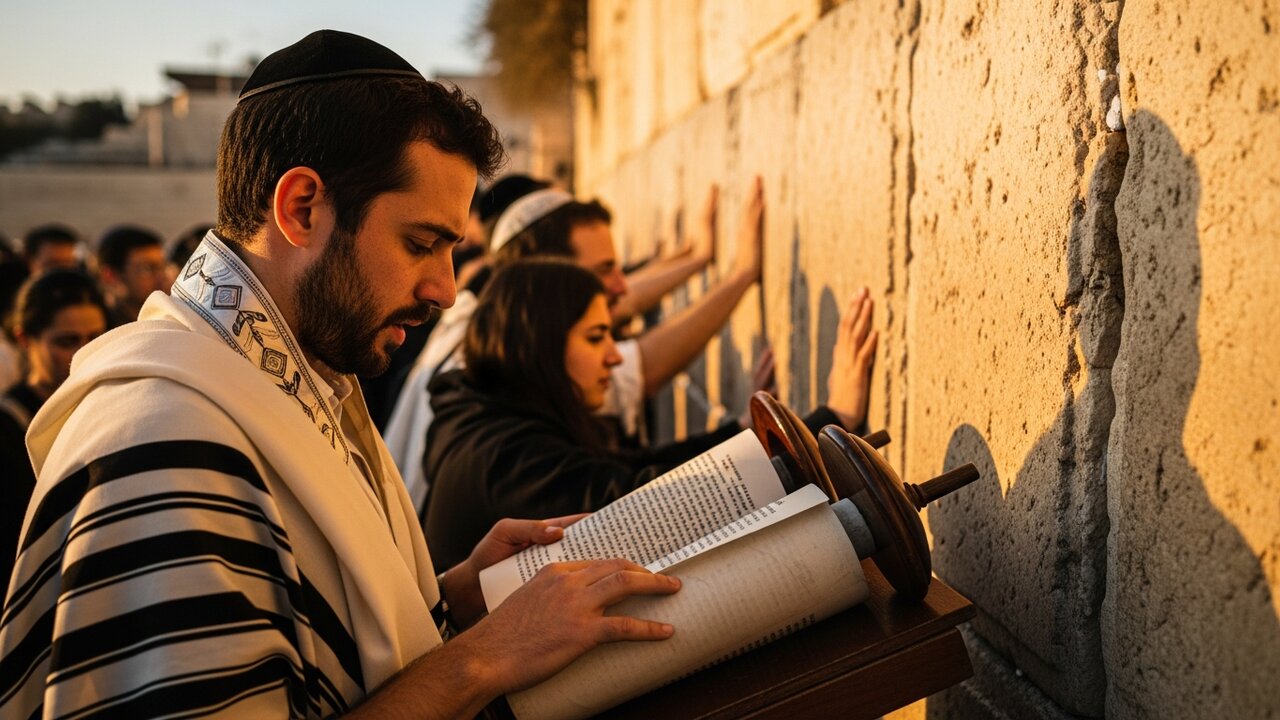
This ranks among the most significant events in modern Jewish history. In six days, Israel captured East Jerusalem, the Western Wall, the Temple Mount, Judea and Samaria (the West Bank), Gaza, the Sinai Peninsula, and the Golan Heights. For many Jews, standing again at the Western Wall after nearly two thousand years of exile from it felt almost unimaginable. Rabbi Shlomo Goren's prayer at the Wall in the war's aftermath became one of the defining images of the modern state.
Pray for the peace of Jerusalem! May those who love you be secure.
— Psalm 122:6
Why 1967 Changed Christianity Too
This effect is often overlooked, but it fits squarely within the theme this whole series has traced. Many Christians, especially within Evangelicalism, began rereading Romans 9–11, Ezekiel, Isaiah, Zechariah, and Revelation through the lens of Israel's literal, physical return to the land. Christian Zionism expanded rapidly in the years after 1967. At the same time, and not entirely coincidentally, Messianic Judaism began growing as a distinct, visible movement — the same reappearance of Jewish followers of Yeshua this series has been building toward since Part 1.
Phase 4: Yom Kippur War and Camp David (1973–1978)
The 1973 Yom Kippur War, a surprise two-front attack on Israel's holiest day, shattered the sense of invincibility the 1967 victory had produced. Israel survived the war, but no longer believed survival was guaranteed by military superiority alone.
Ironically, that shaken confidence eventually made peace possible. In 1978, Egypt became the first Arab nation to formally recognize Israel through the Camp David Accords, and Israel returned the entire Sinai Peninsula in exchange. Land for peace became the template future negotiations would repeatedly attempt to replicate.
Phase 5: Oslo (1993)
This may represent the greatest hope of the modern era in this conflict. Yitzhak Rabin and Yasser Arafat's handshake on the White House lawn, brokered by President Clinton, was watched around the world, and many believed lasting peace had finally arrived.
Instead, violence returned. The First and Second Intifadas that followed deeply eroded trust on both sides, and the hope of 1993 has not, to this point, been fully recovered.
Phase 6: Gaza Disengagement (2005)
This deserves careful, measured treatment, as it remains politically sensitive today. In 2005, Israel removed every settlement and every soldier from Gaza. Supporters of the withdrawal hoped disengagement would reduce friction and create room for greater Palestinian self-government. Instead, the territory entered a new and, in the years that followed, increasingly difficult political chapter.
Phase 7: Hamas Takes Power (2006–07)
Hamas won Palestinian legislative elections in 2006. After violent conflict with the rival Fatah faction, it took complete control of Gaza the following year. Israel and Egypt responded with a blockade, which they have described as necessary to limit weapons reaching Hamas. Critics have argued the blockade has imposed severe humanitarian costs on Gaza's civilian population over the years since. Both positions are part of the documented historical record, and both help explain why this conflict has remained so difficult to resolve.
Phase 8: The Abraham Accords (2020)
This marks a remarkable reversal of decades of regional consensus. For years, most Arab states had insisted there could be no normalization with Israel absent a resolved Palestinian state. In 2020, the UAE, Bahrain, Morocco, and Sudan normalized relations with Israel regardless, and Israel appeared, at that point, more integrated into the broader Middle East than at any previous point in its history. Many observers at the time believed Saudi Arabia might eventually follow.
Phase 9: October 7, 2023
This section is written with particular care, aiming to state the documented history plainly rather than rhetorically.
On October 7, 2023, Hamas launched the largest attack on Israeli civilians in the nation's history. Approximately 1,200 people were killed, and more than 240 people were taken hostage. The attack included killings, kidnappings, and other documented atrocities against civilians, extensively verified by international media and human rights organizations in the months that followed. For many Israelis, October 7 destroyed a long-held assumption — that military superiority alone could guarantee Jewish safety in the modern state.
The War That Followed
The historical account doesn't end with October 7 itself. Israel launched a major military campaign in Gaza with the stated goals of dismantling Hamas's military capabilities and securing the release of the hostages. The campaign caused extensive destruction across Gaza and large civilian death toll, alongside a severe humanitarian crisis for the territory's population.
As of this writing, a ceasefire and hostage-release framework reached in November 2025 has brought a fragile pause to major combat operations, with an international stabilization force monitoring implementation.
The Hidden Story
This is, in many ways, what this whole series has been building toward, and it's easy to miss amid the geopolitics above. While the Middle East fought war after war across these eight decades, something remarkable was happening quietly alongside it.
For almost nineteen hundred years, Jewish followers of Jesus had nearly disappeared as a visible, self-identified community — the long consequence of everything this series has traced, from Birkat ha-Minim in Part 2 through the ghetto in Part 6. Then, beginning in the late 1960s and 1970s, Messianic Jewish congregations began appearing again. Not converted Gentile churches adopting Jewish symbols, but Jewish communities following Yeshua while remaining fully, visibly Jewish — keeping Sabbath, observing the biblical feasts, and worshiping in Hebrew. This hasn't happened at this scale since the earliest centuries of the church.
Alongside this, growing numbers of Gentile Christians have begun rediscovering the Jewishness of Jesus, Paul, and the apostles — reading the New Testament, as this whole series has tried to do, inside its actual first-century Jewish context rather than through fifteen centuries of accumulated Gentile assumption.
Then he said to me, “Prophesy over these bones, and say to them, O dry bones, hear the word of the LORD.”
— Ezekiel 37:4
Final Reflection
This is where the historical portion of this series comes to rest. When this story began, back in Part 1, Rome had destroyed Jerusalem, the Temple was gone, the apostles were scattered, and the synagogue and the church were only beginning to separate.
Two thousand years later, Jerusalem is once again the capital of a Jewish state. The Hebrew language lives again as a spoken tongue. Millions of Jews have returned to the land their ancestors were exiled from. Jewish followers of Yeshua are once again worshiping openly in Israel and around the world. And Christians in growing numbers are reading Jesus and the New Testament in their original Jewish context, rather than through the lens of the separation this series has spent six posts tracing.
History has not come full circle. There are still profound disagreements. The Israeli-Palestinian conflict remains unresolved, with real and painful loss on multiple sides. Jewish and Christian understandings of the Messiah remain different in important ways that this series hasn't tried to resolve. And yet, after nearly two millennia of separation, there is also something genuinely new under the sun: many Jews, Messianic Jews, and Christians are engaging one another with greater historical awareness, and greater mutual respect, than at almost any point since the first century this whole series began with.
Frequently Asked Questions
How many refugees resulted from Israel's founding, and from which communities?
Approximately 700,000 Palestinians became refugees during and after the 1948–49 war. At roughly the same time, over 800,000 Jews fled or were expelled from Arab countries. Both displacements are part of the historical record and both continue to shape the conflict today.
What was Nostra Aetate, and why does it matter for Jewish-Christian relations?
Issued by the Catholic Church in 1965 as part of the Second Vatican Council, Nostra Aetate formally rejected the charge of collective Jewish guilt for Jesus' death, condemned antisemitism, and encouraged interfaith dialogue. Many consider it the most significant shift in official Christian teaching about Judaism since Constantine's era.
Why did the 1967 Six-Day War matter so much for Christians as well as Jews?
Israel's capture of East Jerusalem and the Western Wall led many Christians, particularly Evangelicals, to reread biblical prophecy concerning Israel's restoration to the land. This fueled the growth of Christian Zionism and coincided with the emergence of the modern Messianic Jewish movement.
What is the historical dispute around the Gaza blockade?
Israel and Egypt describe the blockade, imposed after Hamas's 2007 takeover of Gaza, as necessary to prevent weapons from reaching Hamas. Critics argue it has caused severe humanitarian harm to Gaza's civilian population. Both positions are documented and remain part of ongoing public debate.
What happened on October 7, 2023?
Hamas launched the deadliest attack on Israeli civilians in the country's history, killing approximately 1,200 people and taking more than 240 hostages, including killings, kidnappings, and other documented atrocities against civilians.
Why are Gaza war casualty figures described as debated?
Casualty figures for the war following October 7 have primarily come from the Gaza Health Ministry and are widely cited by international media and organizations, but aspects of the methodology and precise counts are disputed among researchers, governments, and other observers.
What is Messianic Judaism, and why is its reemergence significant?
Messianic Judaism refers to Jewish communities who follow Yeshua as Messiah while remaining fully Jewish — keeping Sabbath, observing biblical feasts, and worshiping in Hebrew, rather than adopting Gentile Christian identity. Its reemergence beginning in the late 1960s and 1970s represents a visible Jewish following of Jesus at a scale not seen since the earliest centuries of the church, echoing the apostolic model this series traced all the way back in Part 2.
Where This Series Goes Next
This post closes out the historical arc of the series — from Rome's earliest persecutions of believers in Yeshua through the modern restoration of the Jewish state and the quiet reappearance of Jewish followers of Jesus within it. Part 1 began with Caesar demanding worship Revelation refused to give him. Part 7 ends with Jerusalem, once again, a living Jewish city, and with Jews and Christians beginning, unevenly but genuinely, to find their way back toward one another after nearly two thousand years apart.
But the story isn't finished, and this series has one more post ahead of it. Antisemitism is rising again in many parts of the world even as Zionism, aliyah, and Torah observance are growing inside Israel itself — a convergence that many believers see as the leading edge of something larger still unfolding. Part 8 turns from history toward that unfolding present, and toward what Scripture says lies further ahead still: Zechariah's picture of the nations gathered against Jerusalem, and God's promise to defend His people and, in the end, to be recognized by them.
You may want to revisit the earlier posts in this series — Rome's persecutions, the theological separation of church and synagogue, Constantine's institutionalization of that separation, the rise of Latin Christendom, the Crusades and Inquisition, and the long road from exile to restoration — alongside related posts on the site, including Fall Into Formation, Every Link in the Chain, The Center Holds, and Jerusalem Must Welcome Jesus Home.
Church History Series
Previous: ← Part 6 — From Exile to Restoration: The Return of Israel
Next: Part 8 — Redemption Unfolding: Rising Hatred, Rising Return, and the Hope of Zechariah 14 →